Post-lecture of Fundamentals of Human Communication
Hello everyone! This is my first blog regarding the communicating sciences module.
Taking a breath again after finishing the first session. I am now feeling much better and relieved, as before the lecture I was not sure about this module. I was nervous, anxious and reluctant; not sure if I will continue with this module or not! I was very unsure as to what it entailed. However, I concluded upon finishing the first session, the communicating sciences module will equip me with new ways of exploring different scientific concepts and ideas that I had not heard about before. I found that the effect of nudge theory on human behaviour, and behavioural norms and priming, all of which have an effect on how to hone, control, and improve our behaviour as humans, were fascinating. Moreover, this session verified my high expectations of the utility of communication between humans, which depends largely on cultivating trust and building a bridge between the thoughts of one another. The session also highlighted the importance of living in a safe community without risk of threat to life.
The first session was also interesting as it made me realise that there is still a lot I could do to develop my communication skills. By the end of this semester I wish to achieve the following objectives:
1) Develop my presentation skills
2) Improve my writing skills
3) Create a Vodcast
4) Learn how to summarise a long text such as journal or article into a press release
5) Find the most effective ways to communicate with different demographic groups to raise awareness on a topic
Pre-lecture of Press office and Journalism
I am really looking forward to learning more about communicating science in the press release and journalist workshop in the second week lecture. I have always wondered why a company or an organisation needs a press officer to represent them, however, I have not researched this topic before. I also want to learn more about journalism and the media. Therefore, I am expecting that by the end of this workshop I will learn the following:
1) How the press officer deals with journalists
2) How the press officer proof-reads and writes the press release
3) How the press officer reflects and responds to the media on behalf of the company or organisation
4) How the journalist deals and engages with the media
5) How journalists manage to interview different people in different contexts
6) How journalists engage with the public and target different audiences
Post-lecture of Press office and Journalism
The lecture was interesting as it covered many points, such as how journalists hear about research and the various roles associated with a press office; including guidelines on writing a press release and how its structure varies from scientific writing.
I believe this lecture was helpful as it educated me on what a press release is. It also helped to improve my general reading and writing skills, which will be useful when I get to write my own press release, which will be part of the coursework for this module. By writing the press release, I will be able to demonstrate and apply the knowledge I gained from this lecture. This task exceeds the expectations I had prior to attending this lecture, which to me, is a greater achievement.

Pre-lecture of Public speaking and communicating to your audience
Another interesting lecture to have on the 6th of February 2020. I am keen on attending this session to fortify my communication skills as I am expecting by the end of this lecture that I will learn the requirements of not only being able to give a talk to audiences, but also to engage with them. This, I believe would rely on my own confidence, body language and speaking skills.
I think that using simple language which is easy to understand and asking interactive questions are the key components in making audiences participate in a conversation. Finally, I assume that the main goal of this topic will be how to let the audience focus on taking the message home clearly.

Post-lecture of Public speaking and communicating to your audience
The lecture was outstanding by Professor Lewis as he tried to empower us to stand in front of our classmates and give a small talk for one minute about random topics which he chose for us to talk about. My topic was on “colours”, and Lewis asked me to go back to my seat and return once again to the centre stage as I started talking before standing in the right place. This was a bit difficult and more challenging to take my breath again and refocus on what and how I can talk about colours for one minute.
This practice helped empowered and instilled in me the confidence to speak publicly, I was able to face my nerves and overcome my shaky voice. Moreover, I grasped how to link my thoughts and ideas, as I introduced a topic which I did not expect and prepare for beforehand. Professor Lewis also covered very important steps on how to handle nerves, and the one he surprised me with is that using a pen to assess your nervousness, as it might show due to involuntary movement of hands and fingers.
Professor Lewis also asked us to choose the right level and depth of language for the different audience ages to grab their attention. Moreover, he illustrated to us some useful steps to design and structure the power point slides. He also gave us examples on good and bad power point slides. All of the above will help me to ameliorate my skills especially when I will start my future work as a tutor and standing in front of students and give them the lesson. I will also use the skills I gained from this lecture to give speech to the conference or organization that I will work for in the future.
Travel to Macedonia
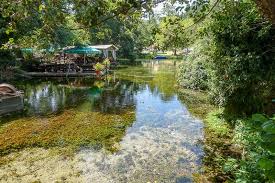
Macedonia is a fantastic place to visit. I went to Ohrid City, which has a big beautiful lake, for three nights from the 7th to 10th February 2020. My hotel is very good and called Tino hotel and has sauna, steam, Jacuzzi and swimming pool facilities. The staff are friendly and the atmosphere is very nice and calm. What I like most is the location of the hotel which is opposite to Ohrid Lake and about 8 minutes away from the city centre. The food is tasty and delicious especially the traditional food such as trout and moussaka. The milk is delicious especially when added to tea or coffee.
In my second day I went to the Monastery of St. Naum, which is in north Macedonia, a few miles away from Albania. I went there by bus because it is cheaper than the taxi; 5 euros compared to 35 euros. There are sightseeing and spectacular view everywhere in that area especially the mountains and Ohrid Lake which has one of the purest waters in the world. In the lake, you can take a boat trip for 30 minutes with the cost of 15 euros. Macedonian people are friendly and easy to deal with, and most of them speak English too.
Pre-lecture of television production
I believe this topic will be very interesting, as I think I will learn more about television shows and scenes. Moreover, I hope to discover the importance of editing before broadcasting and what role it has in television productions. Before this lecture, I am also wondering if I will find out what is going on behind the scenes in the television studios.
I think I will also know more about the role of television producers and their approaches to introducing topics to the public. I want to find out what he/she can or cannot say or reveal to the public. Also I want to understand how television producers divvy their focus on a range of topics and how they rank them in order of importance. I also hope to introduce and practice simulation television presentations in groups.
Post-lecture of television production
After this lecture, I have found a group to start planning for the creation of a Vodcast. My plan is to start thinking about planning the script for our video. Now, the big challenge is how to choose the scenario to record the video and then to edit it for a TV channel. I will have to be creative to make the scenes all good and easy to follow for my target audience. I will also need to target the right people to accommodate for very good conversations and reflections on the benefit of the video, as well as to share the scientific ideas or the rationales for the subject we cover.
Another challenge is how to take the most attractive video shots. Shooting a very good scene will require practice, so that I am ultimately able to be professional in taking close up shots, mid shots, wide shots, low and high angle, and bird’s eye shots. Finally, I will try my best to choose the right moment to start the non-sync wide shot to make it interesting and grab the audiences attention. By then, I would have developed my media skills which will definitely help me in my future work as a tutor which will include recording a video or scene to explain about different topics or for advertisement.
Life in Barcelona
Barcelona is a very beautiful city to visit. I came to Barcelona yesterday and will return to the UK tomorrow on the second of March 2020. During my stay, I spent most of my time at the beach. People enjoy playing volleyball here because there are long and spacious sandy beaches. The weather is usually warm with sunshine. The range of sea food is delicious – especially the salmon fish.
People are very friendly and helpful. They make me feel as if Barcelona is my second home! I have decided to go to Barcelona every year to enjoy some time away from stress.
Pre-lecture of video editing with iMovie
In this lecture I am expecting to learn how to edit the video after recording the scenes to make it attractive for the audience. Presenting a video for advertisement or a film require an effort to make it successful. Therefore, I believe by the end of this lecture I will have acquired the knowledge on how to plan a video and then to edit the video shoots with more impact and grabbing attention.
Post-lecture of video editing with iMovie
Well done! For our group, which was assembled by our facilitator Leon Cole. We were distributed into groups of three people to practice recording a video then to edit it by using iMovie. Our topic was about the day of Tuesday. We managed to record the video and to edit it within one hour.
It was very challenging and difficult to write the script or the scenario about “Tuesday” topic. We then struggled with taking the video shoots, not knowing where to take them and how to prepare ourselves to do it. We decided to make a time-lapse video with background sound to make it have more impact to grab the audiences attention.
This practice session will definitely help me and my partners to make our Vodcast for the second coursework. I feel I am more ready now to plan and start recording and editing the video than before I started the lecture. This will also make me more confident with creating multimedia content for any future work including video recording and editing in my future work as tutor at college or university, or even as a YouTuber!
Pre-lecture of use and abuse of statistics/infographics and scienceogram
This lecture will be amazing as it will cover statistics, infographics and scienceogram. I am expecting that I will be learning about how to present good and reliable statistics as well as whether the statistics represent more or less bias.
Many times, we are faced with numbers and statistics on the news and media outlets which can sometimes sound ridiculous. I often find myself questioning the ways in which this data can be skewed to support certain agendas.
I will also be learning how and when to use the infographics and scienceogram – both of which I am quite unfamiliar with. I hope to learn about what data or information can be represented by infographics and scienceogram, and what is the benefit of using them.

Post-lecture of use and abuse of statistics/infographics and scienceogram
Using statistics and graphs can be difficult to make. Presenting different kinds of charts is challenging as they are used in different situations according to the number of the variables we have. This lecture was very helpful, and elucidated which charts I should opt for in my postgraduate project dissertation as well as for my future work which usually include using different kinds of charts such as bar, pie and bubble chart, etc. Choosing the right chart not only to clarify the data but also to make the information easily visualised by the audience for a clear picture about the facts and ideas which have been pointed out.
In the future, I need to be careful about using statistics with graphs that represent figures and numbers to provide an objective non-biased so as not to distort the reality of the data I am presenting. I need to know where and how to make an infographics. I hope to be able choose the right graphs for the right data sets to show clear and concise information throughout within the right scale. I will also have to be honest when I use scienceogram to present my statistics with more logic. For example, in my future research, if I need to present a graph or statistic about government spending, I will have to clarify if there is any miscellaneous money included in this graph or statistic to avoid misleading the audiences.
Scared of Coronavirus (COVID-19)
These days I am more positive to face the myths regarding the novel Coronavirus (COVID-19). Everyone I meet every day has concerns about Coronavirus, some of them are optimistic while few people are pessimistic!
I can not see why some media outlets are partaking in unnecessary scaremongering rather than reassuring people and focusing their efforts on propagating proper hygiene and prophylactic steps to avoid it.
I was shocked and unhappy when I went yesterday to ASDA and Morrison and I found no hand gel, soup and wipes or tissue to buy. I also found it weird that there is no food cans and no pasta!
My wish for today the 12th of March 2020 is that I hope everyone will be in good health without any disease whether it be from Coronavirus or any other diseases. I hope to soon see people talking and planning the vacations for the summer instead of stressing themselves with Coronavirus, and the end of this pandemic.
New Update regarding the Coronavirus on 19/03/2020
University is closed and classes have been cancelled! No more face to face lecture are to take place from now on. Online sessions instead will be the only way to continue during this very difficult time.
I was also about to borrow an iPad from the university to start recording our Vodcast. This of course will put me under some pressure. I might buy or loan a canon camera to start recording the video. Seeing my group mates will not be that difficult as we might use Skype to see each other and discuss our script and record and edit our final video.
Apart from this, I am feeling nervous and sad with the bad news I heard about my uncle who was recently diagnosed with COVID-19 and he is at the moment in the ICU.
Pre-lecture of Internet, Wikis and Podcast
This topic is very important to direct me on which resources I must search my future subjects with. Using different internet resources have advantages and disadvantages as some of them are reliable and trustworthy whilst others may provide false or fake information which are biased and untrustworthy.
Having the skills and the ability to use the internet and discern whether the information you get from web searching is correct or incorrect can have a huge impact on public health and our lives. The internet is a whole world in itself, and can be utilised for limitless purposes. Proper use of the internet can help to raise money for charity, help people with their health issues as well as for scientific communication. I can not wait to see what this lecture will be about!
Post-lecture of Internet, Wikis and Podcast
Wow! This lecture was incredibly helpful as it made me reconsider using the untrustworthy websites. I always have to take my correct, truthfulness and unbiased information without any fake or wrong information from different internet resources such as Wikipedia or other unknown and untrustworthy resources.
I always considered advertising and marketing some of my ideas by using the internet or raising money for cancer research charities. This lecture also helped me to focus on how to grab and attract the audiences toward my ideas without seeing them by utilising the internet resources. As a scientist, I believe I need to bear in mind and plan on taking the opportunity to share my studies and works. I can achieve this by starting to write about science communication and advertise my self and knowledge to improve my employability prospects in communicating science jobs.
Having a scientific channel on YouTube may be another step I need to think about after I graduate to share my ideas and thoughts and to target different audiences effectively.
Pre-lecture of science communication, marketing, radio production and interviews
Communication science is the art of language communication in my opinion as it depends mainly on grabbing attention and delivering messages clearly.
I have always been interested in communication and how language is at the very basis of our understanding of the universe – language which does not necessarily have to be verbal, but can also be through signs, written, or even by bleeping noises as is the case in Morse code.
Today’s lecture will be the last lecture for this module, and I wish that it will boost my understanding further to ameliorate the new aspects of the skills that scientists are keen on having.
Post-lecture of science communication, marketing, radio production and interviews.
This is exactly what I was expecting from this lecture. I am really now thinking again to have a job in the communicating science field.
The lecture explained to me how to interview the expert and which steps you need to follow to meet the goals of the interview. These steps are definitely helpful and I will make sure I will use them in my future job.
In order to make a successful interview which grabs the audiences’ attention, a good plan between the interviewer and the interviewee is essential and favourable beforehand to provide a comfortable atmosphere for both the interviewer and the interviewee to start the context as well as to target the audiences. Prepare, research and practise are the 3 key elements in achieving interview tasks.
I feel as if these skills overlap in many ways with several areas of science communication as it reinforces the importance of having a solid structure to follow such that your efforts do not appear lacklustre, and instead achieve fruitful outcomes for the betterment of the scientific community.
Filming the video under quarantine conditions
As the name suggests, group work requires a group effort, which is often most efficient when the group meets up to collaborate on the project. The project required regular meeting to plan the tasks we had to accomplish. The Vodcast required follow up meetings to track the progress we were making. However, with the lock down, there were some issues to arrange the meetings and we were struggling as a group to plan it, as I was busy with my voluntary job in Manor pharmacy, located in Radlett, whilst Adian, my group mate, is working in the NHS, and Julie was busy with her exams.
We used to use Skype video call each other to discuss the details of the scripts and which areas we had to research and how to edit the video after we finished.
I faced some difficulties whilst researching the role of a psychiatrist, and how I can emulate this role. Arranging the atmosphere for the interview took some time, which I arranged with my friend who interviewed me as agreed, I was unable to film with my group mates as they could not join me due to the COVID-19 lock down. This was a very hard time and experience as I was working under pressure with this pandemics difficulties. I had to use the WhatsApp programme to ask my colleagues for any queries or Skype them if necessary, utilizing the screen share feature to observe the editing process and the video. The difficult thing was to work separately from my group, and what I enjoyed was working with unexpected flatmate who interviewed me with this Vodcast, I am very grateful as they helped us out in the project despite not being a part of our group!
What is me now compared to the first day.
I remember before I started this module I was not sure about it as I was worried, anxious and hesitant to continue the module, as I had no idea about the content and what I will be learning about. I believe that what I have learnt from this module after I finished all these sessions, is that communicating is a multifaceted endeavour which relies on expertise in several fields ranging from multimedia to psychology. The module allowed me to find myself again in the communicating science field, as it has clarified to me many things I was previously unaware of, such as planning interviews beforehand to achieve a better interview outcome to present to audiences. I liked the communicating sciences module and I believe it will help me in my science communication throughout my future prospects. Studying science communication inspired me to think about my skill set and in which areas I believe I will be most effective at. I really enjoyed everything from the various workshops, the presentations I presented, and generally the way this module taught us how to communicate science. This module will also increase the opportunity to share my works and experiences as well as practise online communication and start improving my career in science communication. What I was not expecting from the communicating science module is for it to help me not only write about aspects of public health and other scientific fields, but also to help in finding a career in communicating sciences such as press office, advertising, writing press releases as well as TV production.
Science communication helped me to understand the methodology behind designing advertisements and to how to approach targeting different audiences with different contexts. I think targeting the audiences, for example, through the use of advertisements, requires me to continue practising and improving my scientific communication skills to ultimately reach a level in which I am ready and confident to communicate scientific data to them effectively.
 Aziz's blog